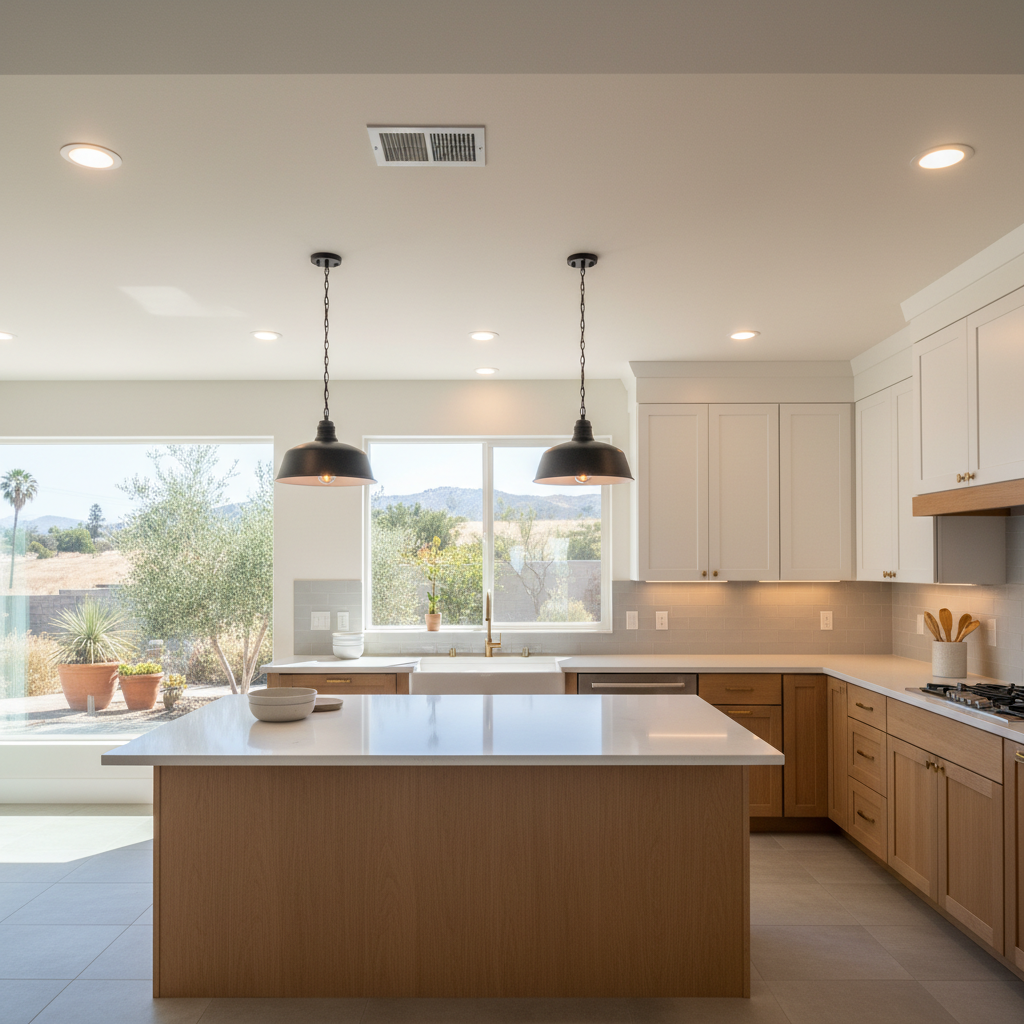
You want good light in your kitchen, right? Of course you do. It's not just about seeing what you're chopping; it's about setting the mood, making the space feel bigger, and really showing off those new countertops. But what's it actually going to cost you to get that perfect glow?
What Makes Kitchen Lighting Costs Go Up or Down?
A lot of folks think lighting is just picking out a fixture and screwing it in. It's way more involved than that, especially if you're talking about a proper kitchen setup. Here's what really makes the price tag jump around:
Fixture Type & Quality: This is probably the biggest one. A basic recessed LED might run you $20-$50. A fancy pendant light over your island, though? That could be $150 to $800 or even more, just for the fixture itself. Under-cabinet strip lighting, especially good quality, dimmable LED, runs $20-$60 per linear foot. If you're looking at something custom or high-end, well, the sky's pretty much the limit.
Electrical Work: Are we just swapping out existing fixtures, or are we adding new circuits, moving switches, or installing new junction boxes? Running new wires, particularly through walls or ceilings, is where labor costs really add up. Older homes in areas like Pasadena's Bungalow Heaven district often have outdated wiring that needs significant upgrades to handle modern loads. That means more time and materials for the electrician, naturally.
Switching & Controls: Basic on/off switches are cheap. Dimmer switches, especially smart ones that integrate with your home system, cost more. Adding multiple switches for different zones (say, island lights, task lighting, ambient lighting) means more wiring and more labor.
Accessibility: Is your ceiling easy to get to, or do we have to cut into drywall, fish wires through tight spaces, and then patch everything up? Vaulted ceilings or hard-to-reach spots definitely increase labor time.
Permits: For significant electrical work, like adding new circuits or changing the electrical panel, you'll need permits from the City of Pasadena. These aren't huge costs, usually a few hundred bucks, but they're non-negotiable and ensure the work is up to code.
Typical Cost Ranges for Kitchen Lighting in Pasadena
Alright, let's talk numbers. Keep in mind these are averages, and your specific project might be higher or lower.
Basic Fixture Swap (no new wiring): If you're just replacing a few existing fixtures with new ones using the same wiring, you might pay $150-$300 per fixture for labor, plus the cost of the fixture itself. So, for three new pendants and a flush mount, you're looking at $600-$1200 for labor, plus $300-$1500 for fixtures.
Adding Recessed Lighting (existing circuit, simple): Want to add 4-6 recessed lights where there weren't any before, but you can tap into an existing, adequate circuit? Expect to pay $100-$250 per fixture for installation, plus $20-$50 per fixture. Total for 6 lights: $720-$1800 for labor and fixtures.
Comprehensive Lighting Overhaul (new circuits, multiple fixture types, dimmers): This is where you're gutting the old lighting, adding recessed, pendants, under-cabinet, and maybe some accent lighting, all on new switches and dimmers. This kind of project often requires new home runs to the panel. For a medium-sized kitchen, you're usually looking at a total project cost between $3,000 and $8,000. For a larger, more complex setup, it can easily go over $10,000.
Under-Cabinet Lighting: This is a popular upgrade. For a typical 10-15 linear feet of good quality, dimmable LED strip lighting, including transformer and installation, you're usually in the $600-$1,500 range.
Remember, these numbers include both materials (wires, junction boxes, switches) and labor for a licensed electrician. Don't skimp on the electrician; bad wiring is a fire hazard, plain and simple.
What's Included in a Quote?
When Valley Kitchen Solutions gives you a quote for lighting, or when you get one from an electrician, it should clearly break down:
Labor Hours/Cost: How many hours they estimate and their hourly rate, or a flat rate for the job.
Material Costs: This covers all the electrical components – wire, conduit, junction boxes, switches, dimmers, outlets, etc. Sometimes fixtures are included, sometimes they're listed separately, or you buy them yourself.
Permit Fees: If a permit is needed, it should be listed.
Fixture Installation: Specific costs per fixture type if they're installing many different kinds.
Cleanup & Debris Removal: A good contractor includes this.
How to Avoid Overpaying
Nobody wants to feel ripped off. Here's how to make sure you're getting a fair deal:
Get Multiple Bids: Always get at least three quotes from licensed, insured electricians or contractors. This helps you compare pricing and scope of work.
Be Specific: Know what you want. Do you want warm white or cool white LEDs? Dimmable? Smart home integration? The more details you provide, the more accurate the quote will be, right?
Understand the Scope: Make sure each quote covers the exact same work. One quote might include patching drywall, another might not. Clarify everything.
Buy Your Own Fixtures (Sometimes): If you're particular about the look, buying your own fixtures can save you a markup. Just make sure they're compatible with the electrical system and the electrician is okay with installing them.
Ask About Warranties: What's the warranty on the labor? On the fixtures if they supply them? Good contractors stand behind their work.
Good kitchen lighting makes a huge difference in how you use and enjoy your space. Don't just slap up a cheap fixture and call it a day. Plan it out, get some good advice, and invest in a system that works for you. You'll be glad you did.